The idea of creating robots subservient to humans lies at the foundation of science fiction of recent centuries. From animatrons to embodied physical AI agents, we have come a long way with creating computers based on Neumann architecture.
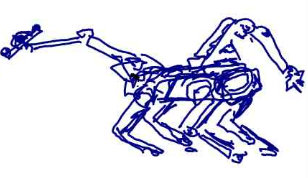
Most of the robots and machines created to serve one specific purpose:
>>> Huge arched machines (and humanoids) operate in isolated factories, assembling one of the best human engineering solutions (BMW cars) for us.
>>> Zabka demonstrates the potential for automated hot dog creation, and every day we see more and more generalized models designed to work in human everyday life without additional training.
Have we reached the future? Yes.
Where do robots live?
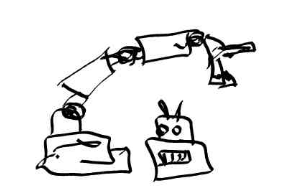
In factories: BMW factory, Chinese mass production
In offices/public spaces: Terminal-concierge issuing a ticket-number in the Gemeente queue and an automatic accessibility chair at Schiphol airport.
In people's homes: Robot vacuum cleaner, dishwasher, washing machine
On the street: Robot delivery, robot taxi, a trash bin that thanks you
But the future described to us by Adam Douglas, Orwell, anime/manga artists, and every second technocrat has not yet arrived.
How we create things
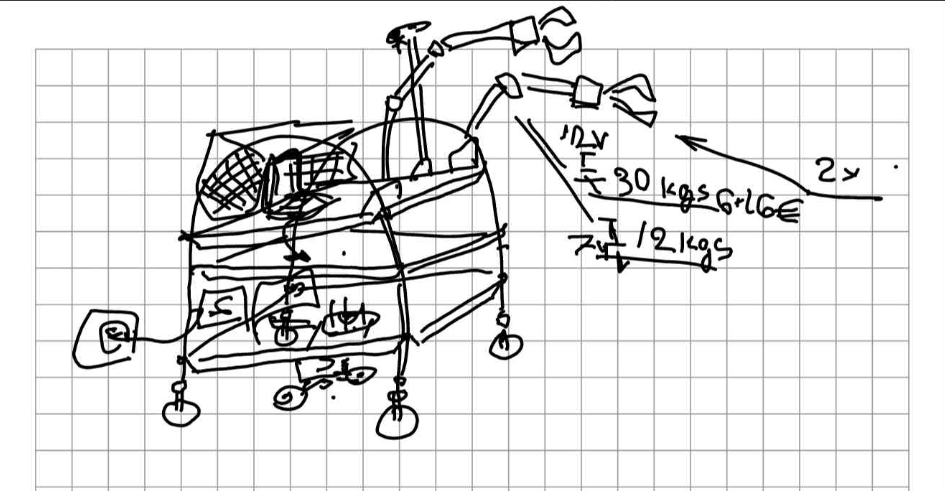
Let's imagine a generalized list of technological tasks arising from the production of European-style bottle caps:
To create such a cap, we can divide the process into several stages:
- PET-plastic preparation
- Molding & Heating
- Cup shape injection molding
- Compression molding
- Cutting separators and threading
- Connection strength testing
- Wadding and sealing
An amazing process, as a result of which a huge part of people get the opportunity to have hermetic packaging in their pocket (or backpack).
The production of hundreds of millions of caps per year clearly requires additional technological solutions that will avoid excessive running of workers from one machine to another with endless packs of plastic and myriads of finished caps.
How to achieve a seamless technological process in the modern world? Allow me to introduce you to the main tool of both a real industrial engineer and a regular Factorio player: Conveyor.
Conveyors are not everywhere
Current complex automated systems based on efficient internal logistics of varied goods over distances and unpredictable schedules.
Conveyors work perfectly for linear, predictable flows — bottle caps moving from mold to quality control. But the moment goods need to travel between buildings, climb stairs, navigate narrow corridors, or respond to an unexpected "we need 50 units in Hall C, now" — the conveyor fails.
What fills this gap? Humans.
We become the universal adapter: picking boxes from one line, carrying them through doors designed for us, placing them onto another line. Warehouses, hospitals, offices — everywhere the architecture was built for walking bipeds, not rolling belts.
The forklift driver, the nurse pushing a medicine cart, the intern running samples between labs — all perform the same function: bridging the gaps conveyors cannot cross.
Our future is tied to "mobile transporters with handles" rather than an "automatic system."
Human-designed world
Let's think about the bicycle.
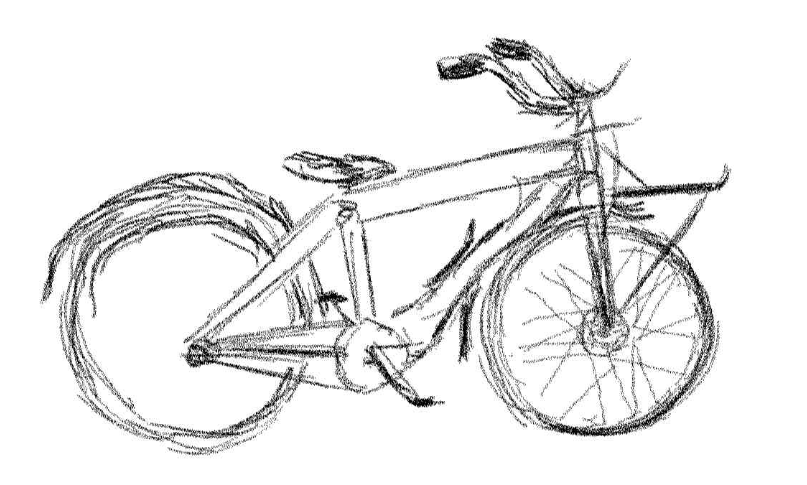
A great human invention, it allows movement from point A to point B while sitting (and doesn't require food). An excellent invention, already electrified (and even more so, petrol-powered) for a long time.
The same logic applies to robots.
A wheeled delivery bot faces stairs, curbs, and doors as existential threats. A quadruped robot can climb but cannot press an elevator button or open a fridge. But a humanoid?
Open-world robotics
Humanoid inherits centuries of interface design for free. Door handles, light switches, steering wheels, office chairs, ladders — all optimized for a ~1.7m bipedal creature with two arms and opposable thumbs.
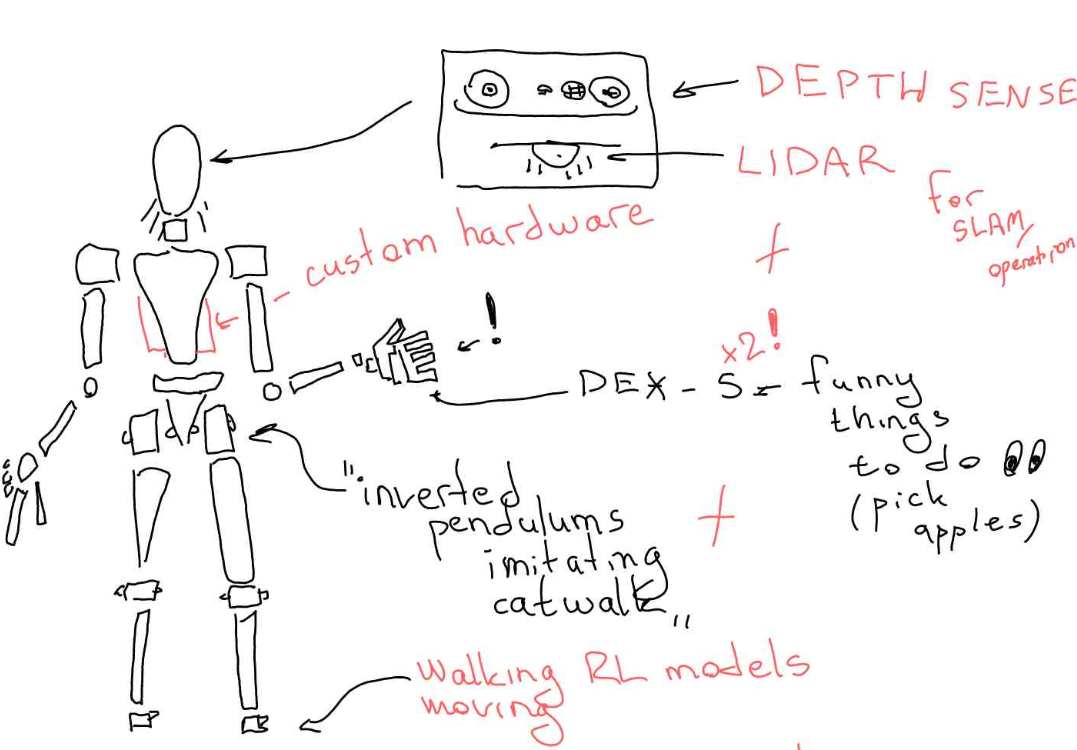
Building a humanoid robot means not rebuilding the world.
Instead of installing ramps, widening corridors, and replacing every handle with an API endpoint, we create a machine that slots into existing infrastructure like a new employee on their first day.
This is Sobaka's mission.
Stay tuned.